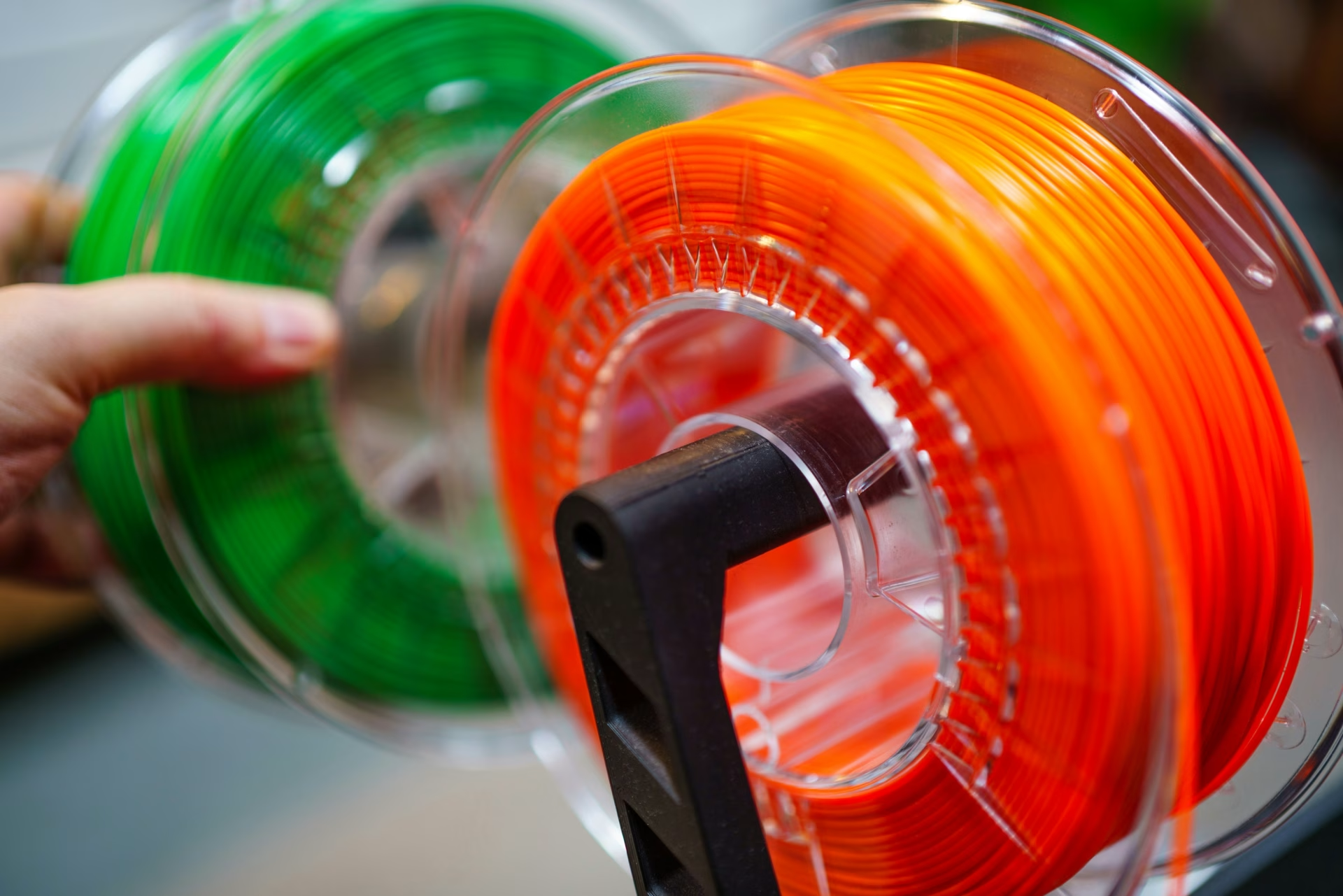
PLA vs PETG: how they differ and which to use
PLA is easier to print and softens with heat. PETG is tougher, but it wants a hotter nozzle and dry plastic.
PLA and PETG are the two filaments a home printer meets most often. Both run without an industrial chamber. Both fit a 1.75 mm extruder. The similarity ends there. One is for parts that have to look right indoors. The other is for parts that also have to carry a load.
What they are made of
PLA is polylactic acid. The feedstock is often plant sugar, which is why it is described as an easier household plastic. That does not mean a finished part disappears in a compost heap in one season. In normal use PLA is simply a hard, somewhat brittle thermoplastic.
PETG is polyethylene terephthalate modified with glycol. The glycol lowers crystallinity, so the material prints clearer and warps less than plain PET. Mechanically it is tougher than PLA and a little more flexible.
Print settings
The figures below are the usual ranges. A manufacturer can print a narrower window on the box, and then the box wins over the table.
| Property | PLA | PETG |
|---|---|---|
| Nozzle temperature | 190–220 °C | 230–250 °C |
| Bed temperature | 0–60 °C | 70–80 °C |
| Enclosure | Not required | Optional, but draughts hurt |
| Warping | Low | Moderate |
| First layer | Sticks easily | Sticky, easy to over-squash |
| Starts to soften | about 55–60 °C | about 80 °C |
| Impact | Brittle, snaps | Tougher, flexes a little |
| Moisture | Less sensitive | Absorbs moisture, dry it |
| Strings between walls | Uncommon | Common if retraction is low |
What that means at the printer
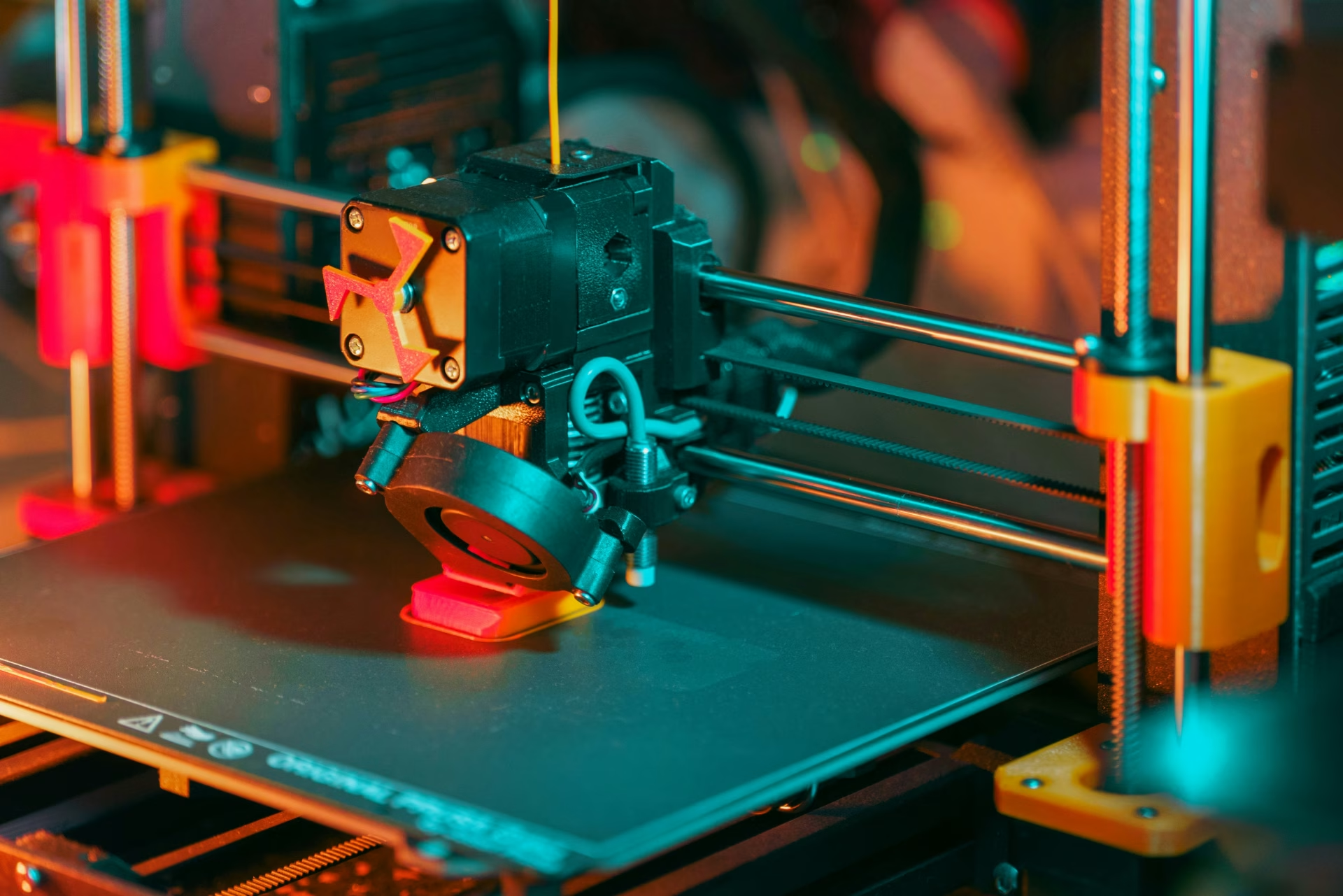
PLA forgives rough settings. The bed can be only warm, the fan can be strong, and the first layer still holds. If corners lift, raising the bed a few degrees or slowing the first layer is usually enough. Large parts rarely warp.
PETG wants a hotter nozzle and a calmer fan. Too much cooling weakens layer bonds. A first layer that is too close welds to a PEI sheet, and peeling the part can peel the coating. Leave a little more gap than with PLA. Increase retraction until the strings shorten, and stop before the nozzle clogs.
Moisture ruins PETG faster. Filament that crackles and leaves a pitted surface is usually wet, not a bad batch. Dry it around 65 °C for a few hours and then keep it sealed. PLA absorbs water too, only more slowly, so the same habit helps both if the bag has been open for a long time.
Which one to use
Choose PLA for decoration, scale models, teaching prints and any part that will not go above about 50 °C or take a knock. Choose PETG for brackets, covers, clips and parts that sit somewhere warmer or need to flex without snapping.
There is no reason to keep only one plastic for every job, and no reason to use PETG where PLA is enough. The easier filament means less fighting with the first layer. The tougher filament only earns its place when the part actually needs that toughness.
Common questions
Can PETG be printed without a heated bed?
A small part can sometimes be stuck down with adhesive, but PETG wants a 70–80 °C surface. Without heat the corners lift, especially once the part is larger than a hand.
Why does PETG string when PLA does not?
PETG stays elastic longer as it cools, so a thin strand draws out of the nozzle. More retraction and a slightly lower nozzle temperature shorten the strings. Getting rid of them entirely is rare.
Can PLA live outdoors?
Briefly, yes. Permanently, no. Sun and summer heat soften it. PETG holds up better, but permanent sun and UV are still not its job the way they are for ASA.
Which one first on a new printer?
PLA. The lower temperature and lower warp show sooner whether the machine is set up correctly. Add PETG once the first layer is already stable.
Both are in the PLA and PETG sections. The broader choice is in how to choose a 3D filament.